
How Much Anatomy Does a Pilates Instructor Need?
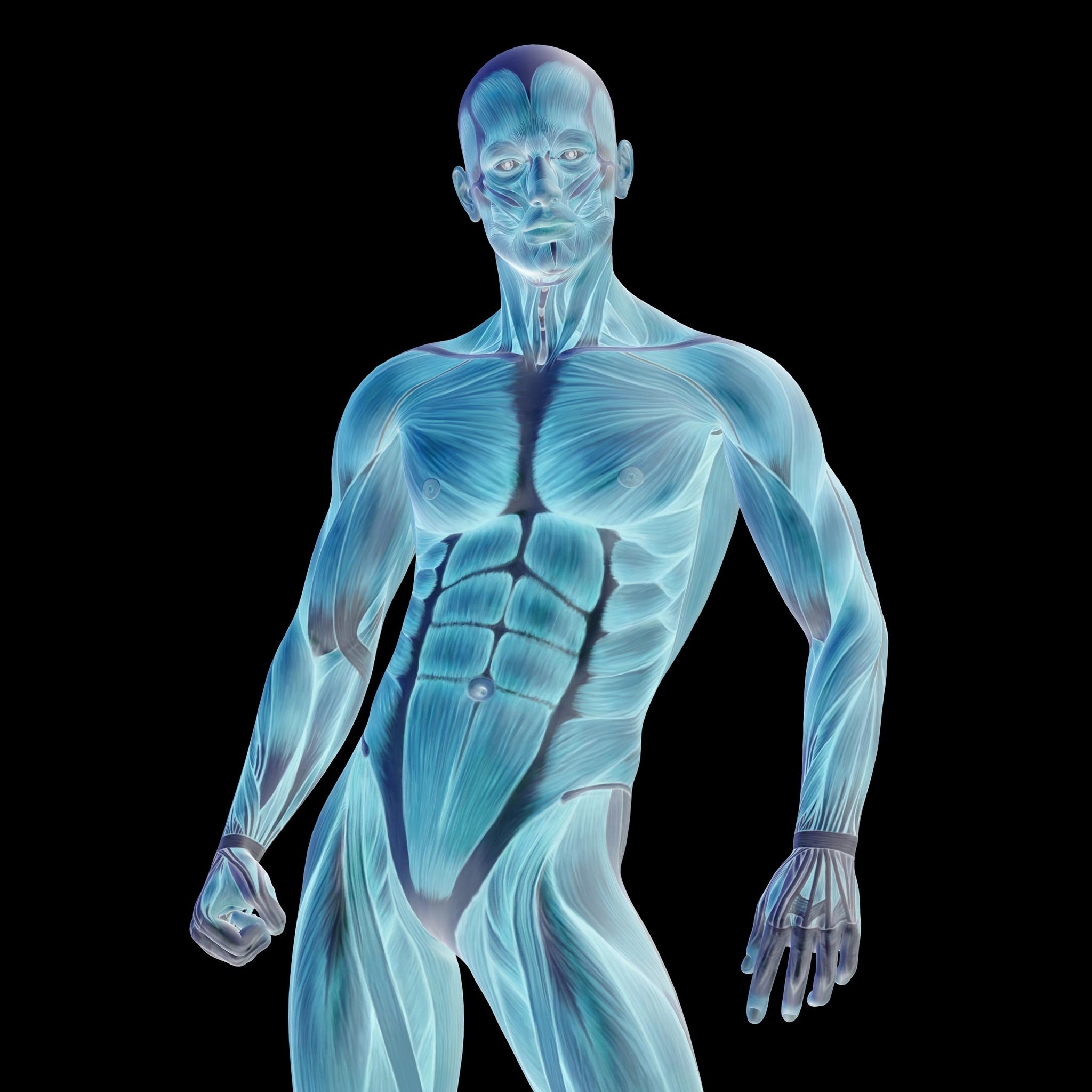
Why Anatomy & Physiology matters in Pilates teacher training and why simply knowing more muscles may not make you a better teacher.
Many Pilates instructors search for Anatomy & Physiology training that helps them understand movement, make better exercise choices and teach more effectively.
Anyone considering becoming a Pilates Instructor will quickly discover that Anatomy & Physiology forms part of their education. But how much Anatomy does a Pilates Instructor actually need to know?
Do you really need to remember muscle origins and insertions? Do you need to understand biomechanics? Should a Pilates Instructor be able to carry out Postural Analysis and movement screening? And how much of this knowledge will actually make a difference once you start teaching real clients?
I have a fairly simple answer.
A Pilates Instructor needs enough Anatomy & Physiology to understand why they are choosing an exercise; not simply enough to know which muscles an exercise works.
That distinction is more important than it might initially appear.
Learning Pilates Exercises Is Only the Beginning
Much Pilates teacher training understandably concentrates on repertoire. Students need to learn exercises, starting positions, movement sequences, breathing, teaching points, modifications and, where Apparatus is involved, appropriate spring settings.
They will also commonly learn the muscles associated with those exercises.
But knowing that an exercise works a particular muscle is not quite the same as being able to work in the opposite direction.
Imagine that you have observed something about the way a client moves. Can you understand enough about what you are seeing to decide whether it is relevant? Can you consider more than one possible explanation? And, if you eventually decide that you want to develop a particular muscular or movement capacity, can you look across your Pilates repertoire and decide which exercise would be most appropriate and why?
That requires more than remembering the anatomy attached to an exercise.
It requires learning how toapply Anatomy & Physiology to movement.
Health Screening and Movement Screening Are Not the Same Thing
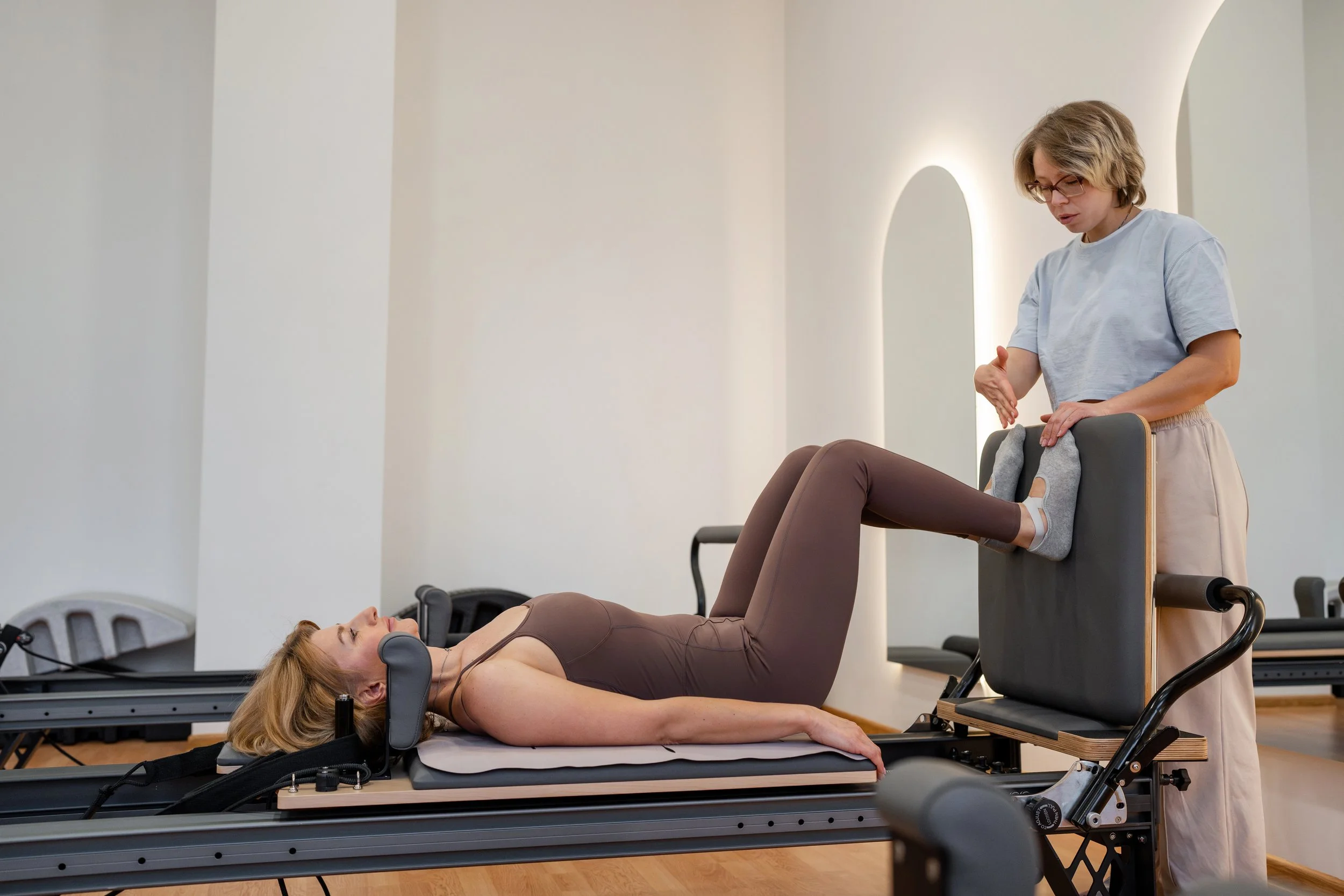
Pilates Instructors are rightly taught the importance of screening clients before exercise. A PAR-Q or health questionnaire can identify medical conditions, injuries and other information that may affect exercise participation or indicate that further advice or referral is required.
But there is another form of screening that interests me just as much: looking at how the individual in front of us actually moves.
Perhaps one knee moves inwards during a squat. Perhaps one shoulder behaves differently from the other. Perhaps a client appears to have adequate movement in one position but struggles to access it during a particular Pilates exercise.
Seeing that characteristic is only the beginning.
The danger comes when we move too quickly from:
“I see this”
to:
“therefore this muscle must be tight or weak”
and immediately to:
“therefore this is the exercise I should teach.”
Human movement is rarely quite that simple.
A Pilates Instructor Should Learn to Ask “Why?”
Suppose a client's knee repeatedly moves inwards during a squat.
It would be easy to decide that the gluteals need strengthening and reach immediately for an exercise associated with them.
But what else might contribute to what we are seeing?
Could available movement at the ankle influence it? Could stance, range or load make a difference? Could the client immediately change the movement in response to a cue? And perhaps most importantly, is this pain-free movement characteristic actually something that needs correcting at all?
This is where deeper Anatomy & Physiology becomes valuable: not because it gives the Instructor an impressive anatomical explanation for everything they see, but because it allows them to generate more than one possible explanation.
A good observation should create a question rather than automatically create a diagnosis.
And sometimes we can investigate that question surprisingly simply. Change one relevant variable, repeat the movement and see what happens.
That isn't about turning Pilates Instructors into physiotherapists. It is about developing the habit of testing our assumptions before allowing those assumptions to determine what we teach.
The Biggest Pilates Course Isn't Necessarily the Best Education
This is also why I would be cautious about judging Pilates teacher training simply by the amount of repertoire included.
Learning more Matwork exercises, adding Reformer, Tower, Wunda Chair or Barrels and undertaking specialist courses can all be extremely valuable. They increase the size of the Instructor's toolbox.
But there is another question: How well can you choose from it?
An Instructor with 300 exercises who cannot explain why they have selected one for a particular client does not necessarily have an advantage over an Instructor with 30 exercises who understands those exercises extremely well.
And even choosing the right exercise is not enough.
A knowledgeable Instructor should be able to recognise whether the client is actually performing that exercise in a way that achieves its intended purpose. When they aren't, can the Instructor deconstruct the exercise, simplify the relevant component, change the resistance or range, use layered cueing and progressively build the movement back up?
That is where Anatomy, movement understanding and teaching skill begin to come together.
My Advice Before Choosing Pilates Teacher Training
When prospective Pilates Instructors ask me which training provider they should choose, my first suggestion is usually to attend as many different Pilates sessions as they reasonably can.
Find Instructors whose teaching impresses you and ask where they learned their profession.
Don't only read the cookery-school prospectus. Taste the food.
My second recommendation is to spend as much time as you reasonably can learning about Anatomy & Physiology and human movement before beginning your Pilates teacher training.
You don't need to become an anatomist, physiotherapist or biomechanist before learning Pilates. But the more you understand about the body when you encounter the repertoire, the sooner you can begin asking not simply:
“How do I teach this exercise?”
but:
“Why would I choose it?”
And eventually:
“What evidence do I have that this particular client needs it?”
Those are considerably more interesting questions.
So, How Much Anatomy Does a Pilates Instructor Really Need?
Perhaps enough to keep asking why.
Enough to understand what an exercise is intended to achieve. Enough to observe when the client isn't achieving it. Enough to question the first explanation that comes into your head. Enough to make intelligent choices from your repertoire and understand when something lies beyond your professional scope.
But Anatomy & Physiology is only part of the answer.
In this month's full Pilates Consultant Perspective, I explore a much bigger question: whether Pilates education should principally teach Instructors more exercises or progressively teach them how to think.
I look at the difference between training a cook and a chef, why Classical Pilates might be better compared with “five a day”, the difference between health screening and physical movement screening, and work through a practical example of a client whose knee moves inwards to show how observation, hypothesis testing and exercise selection might actually connect.
Perhaps most importantly, I consider six qualities that I believe develop a really good Pilates Instructor over time:
Breadth. Depth. Observation. Reasoning. Application. Reflection.
Read the full Perspective: How Much Anatomy Does a Pilates Instructor Really Need?
Chris Onslow
Pilates Consultant, Educator, Industry Specialist
Chris Onslow has worked within the Pilates industry for more than 30 years, supporting Pilates Instructors, studio owners, education providers and equipment manufacturers. He is the founder of Pilates Consultant and Director of Mbodies Training Academy, where he develops online and hybrid Pilates education and Continuing Professional Development designed to support Instructors throughout their careers.
Through the Pilates Consultant blog, Chris shares practical observations on Pilates education, professional development, studio business and the wider issues shaping the Pilates profession.