
What Exercise Should You Combine With Pilates?
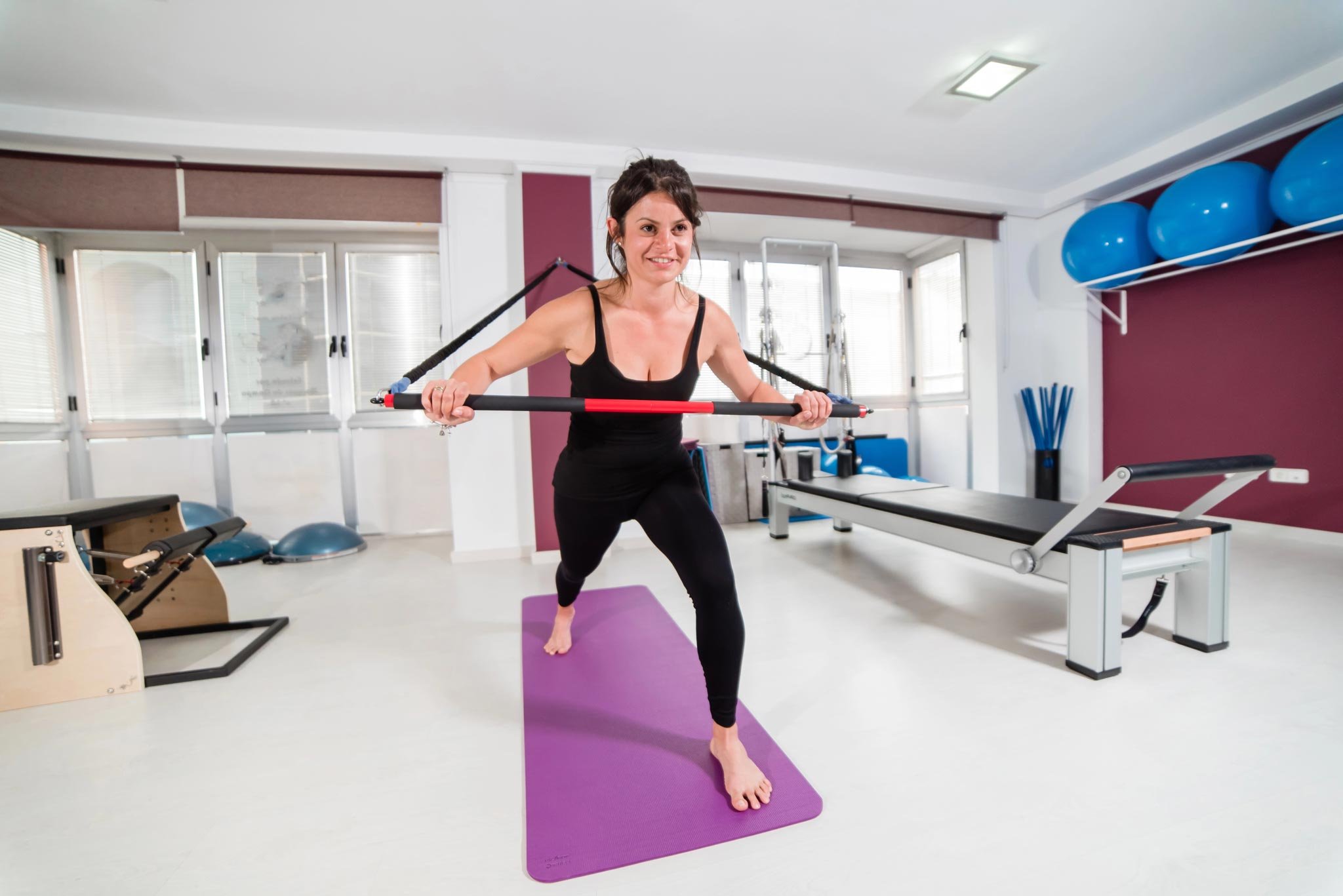
Why the best exercise programme may include Pilates; without asking Pilates to do everything.
Many Pilates instructors ask which other exercise they should combine with Pilates to improve balance, strength, cardiovascular fitness and overall results for their clients.
One of the strengths of Pilates is its versatility. Depending upon the client, the repertoire and the way it is taught, Pilates can contribute to strength, mobility, control, coordination, balance and general physical fitness.
But does that mean Pilates should provide everything?
It is an interesting question because we naturally tend to think about exercise through the activity we teach. A Pilates Instructor sees a client objective and understandably starts considering which Pilates exercises might help achieve it.
Perhaps we should occasionally reverse that process.
Pilates may be the modality we teach, but the client's objective is rarely to become better at Pilates.
The client may want to remain strong and independent as they age. They may want better balance, improved mobility, greater cardiovascular fitness, a return to sport or simply to feel more capable in everyday life.
If that is the objective, the better question may not be what else can we achieve with Pilates? It may be:
What does this client need, and where does Pilates fit within that solution?
Pilates and Balance Training
Balance provides a good example.Pilates can develop many of the physical qualities that contribute to balance, including strength, control and coordination. Pilates exercises themselves can also create significant balance challenges.
But strength and balance are not the same thing.
Strength Training can build the physical capacity needed to maintain or recover balance, while specific Balance Training teaches us to use that capacity when stability is challenged.
That becomes increasingly important as we age. Real life does not usually give us advance warning that our balance is about to be tested. We catch a foot on a kerb, miss a step, turn unexpectedly or have to move rapidly to prevent a stumble becoming a fall.
For some clients, therefore, combining Pilates with specific Balance Training may make more sense than simply finding increasingly difficult Pilates exercises that happen to involve balance.
Should You Combine Cardio With Pilates?
Cardiovascular exercise gives us a different answer.
There is evidence that regular Pilates can improve cardiorespiratory fitness in some populations. But we should not assume that every Pilates class provides sufficient cardiovascular intensity to meet a client's wider aerobic exercise needs.
Current UK physical activity guidance recommends that adults undertake at least 150 minutes of moderate-intensity activity or 75 minutes of vigorous activity each week, alongside activities that develop or maintain strength.
For the client already walking briskly, running, swimming or cycling regularly, Pilates may complement that activity extremely well.
For somebody whose two or three Pilates classes represent virtually all of their weekly exercise, however, it may be worth asking whether sufficient cardiovascular activity is missing.
That doesn't necessarily mean changing their Pilates.
Sometimes the answer could simply be walking more quickly and more often.
There are also interesting developments within Pilates Apparatus training itself. Jumpboard, Fitness Reformer and mixed-Apparatus conditioning can all be programmed to create a greater cardiovascular demand than we would normally expect from a traditional Pilates Method session.
Whether we call all of that Pilates is another discussion.
From the client's perspective, there may be a more important question: does it provide something they need?
Can Something Else Help You Get More From Pilates?
There is another type of combination that I find particularly interesting.
For many years, through our work at Mbodies Training Academy, we observed that using appropriate Myofascial Release before strengthening and movement work could appear to change the way clients subsequently moved.
Contemporary research provides some support for that observation. Self-Myofascial Release can produce short-term improvements in range of movement and generally appears to do so without meaningfully reducing subsequent strength or power.
What the research does not yet allow us to claim confidently is that Myofascial Release followed by Pilates necessarily produces better long-term results than Pilates alone.
That distinction matters.
Professional experience can give us an excellent reason to investigate an idea. It should not encourage us to turn an interesting hypothesis into a scientific fact before the evidence gets there.
But it raises an intriguing possibility: sometimes another technique may be useful not because it replaces Pilates, but because it creates a better opportunity for the exercise that follows.
Looking Beyond Pilates Doesn't Always Mean More Exercise
Perhaps one of the most interesting developments in movement science is the recognition that physical performance is influenced by considerably more than muscles and joints.
Mental rehearsal has been studied alongside physical practice. Rhythmic auditory cueing has been used to influence gait in people with Parkinson's disease. Contemporary pain research has examined whether changing a person's understanding and expectations around persistent pain can influence their response to exercise.
None of this means a Pilates Instructor should become a neurologist, physiotherapist or pain specialist.
It does suggest that learning something outside Pilates can sometimes make us better at understanding the person doing the Pilates.
That may be just as valuable professionally as learning another twenty Pilates exercises.
Pilates Doesn't Have to Do Everything
Perhaps the most useful change is simply one of perspective.
· We don't have to prove that Pilates is cardiovascular training for every client.
· We don't have to make every balance intervention a Pilates exercise.
· We don't have to find a Reformer solution to every strength objective.
And recognising that something else might help a client does not diminish the value of Pilates.
· Sometimes the right answer will be to integrate another approach because we have the appropriate knowledge and competence.
· Sometimes it will be to collaborate with another exercise or healthcare professional.
· And sometimes it will be to refer the client because somebody else is better equipped to provide what they need.
The important thing is that the decision begins with the client rather than the modality.
In my latest Pilates Consultant Industry Perspective, I explore this question in considerably greater depth, looking at Myofascial Release and exercise, Pilates and Balance Training, pain and movement, cardiovascular exercise, Fitness Reformer and mixed-Apparatus HIIT. I also consider something I recently noticed in the conditioning facilities at Arsenal Football Club: a Reformer sitting not in isolation, but alongside cardiovascular equipment, resistance machines and free weights.
It prompted a deceptively simple question:
What does the Reformer do particularly well and what might another training method or piece of equipment do better?
Chris Onslow
Pilates Consultant, Educator, Industry Specialist
Chris Onslow has worked within the Pilates industry for more than 30 years, supporting Pilates Instructors, studio owners, education providers and equipment manufacturers. He is the founder of Pilates Consultant and Director of Mbodies Training Academy, where he develops online and hybrid Pilates education and Continuing Professional Development designed to support Instructors throughout their careers.
Through the Pilates Consultant blog, Chris shares practical observations on Pilates education, professional development, studio business and the wider issues shaping the Pilates profession.