
Customers are More Sophisticated Than Studios Realise

They Increasingly Understand the Difference Between Exercise Delivery and True Professional Expertise
One of the most significant developments in the UK wellness and fitness sector over the past decade has been the explosive growth of Reformer studios.
In many towns and cities across the country, Reformer based group exercise has moved from being a relatively niche offering into a mainstream commercial fitness category.
New studios continue to appear on high streets, within boutique wellness concepts, inside physiotherapy clinics and increasingly within investor led multi-site models.At the same time, social media has helped position Reformer exercise as aspirational, premium, visually attractive and highly marketable.
Demand from consumers remains extremely strong
But underneath this growth sits a much more important industry conversation that I believe the sector now needs to address honestly.
The rapid expansion of Reformer studios is creating enormous pressure on instructor supply, and that pressure is beginning to reshape both the customer experience and the long term professionalism of the industry itself.
The Industry Is Growing Faster Than Instructor Experience whereas historically, many instructors developed gradually. A newly qualified teacher would often spend years assisting experienced studio owners, observing senior teachers, working with mixed populations, refining cueing, learning modifications, managing injuries and slowly developing judgement through repeated exposure to real clients and real teaching environments.
The qualification itself was only the beginning
Real confidence and competence were traditionally developed through mentoring, observation, repetition, reflection, continuing education and exposure to increasingly varied client needs over time.
In today's Reformer market, however, the speed of studio expansion means many newly qualified instructors are stepping directly into lead teaching roles almost immediately after certification.
This is not necessarily because studio owners are irresponsible. In many cases there simply are not enough experienced instructors available to meet demand.
The industry has effectively accelerated the teaching pathway; not because educational standards have intentionally reduced, but because commercial growth has outpaced instructor maturity.
That creates both opportunity and risk simultaneously.
Customers Are More Sophisticated Than Many Operators Assume
One of the biggest mistakes within parts of the Reformer sector is underestimating the customer. Customers are not stupid.
In fact, today's clients are often becoming increasingly educated, observant and selective. Many clients may not fully understand biomechanics, movement science or exercise programming, although sadly neither do many novice instructors, but they absolutely understand confidence, professionalism, safety, attentiveness, good cueing and whether they feel genuinely supported.
Increasingly, clients can sense the difference between an instructor who is simply delivering choreography and an instructor who truly understands movement, adaptation and client need.
That distinction becomes particularly important as studios increasingly attract broader and more clinically varied populations. Reformer environments now regularly include older adults, deconditioned clients, post injury presentations, peri-menopausal and menopausal women, hypermobility presentations, joint replacements, neurological conditions and increasingly clients managing long term health concerns or returning to exercise after medical intervention.
The commercial success of Reformer exercise has broadened the demographic enormously and with that inevitably comes greater responsibility.

Qualification Is the Beginning, Not the Destination
One of the most dangerous misconceptions emerging within the industry is the idea that qualification equals mastery. In reality, qualification should represent entry into professional practice, not completion of learning.
This is where Continuing Professional Development (CPD) becomes critically important.
A foundation Pilates or Fitness Reformer qualification may teach repertoire, equipment handling, teaching structure, cueing, safety principles and basic class management. But genuine professional depth develops afterwards.
Through good quality CPD, instructors begin to understand how to adapt movement, how to manage complexity, how to modify safely, how to progress clients intelligently and ultimately how to think critically rather than simply follow choreography.
This becomes particularly important in Reformer environments where classes may contain huge variation in age, movement confidence, injury history, fitness level and medical background.
The instructor who only understands the “ideal client” quickly reaches limitations.
The instructor who continues learning develops professional resilience, adaptability and a far deeper understanding of the people standing in front of them.
The Future of the Industry Depends on Depth, Not Just Growth
The Reformer sector currently faces an interesting crossroads. On one hand consumer demand is booming, studio openings continue relentlessly and the market remains commercially exciting.
On the other hand instructor shortages, inconsistent educational depth, rapid qualification pathways and increasing commercial pressure all risk creating long term quality challenges if the industry does not continue investing seriously in professional development.
This is why quality CPD matters so much. Not simply as a certificate gained from a half day or weekend course, and certainly not as a box ticking exercise, but as an ongoing process of developing judgement, confidence, adaptability and deeper professional understanding.
The strongest instructors in the future are unlikely to be those who simply completed an initial training quickly and immediately entered full teaching schedules. They will more likely be the instructors who continue building breadth of understanding through mentorship, reflective practice, specialist education and exposure to increasingly varied client populations over time.
Education Also Has To Evolve Around Real Life
One of the positive developments in recent years has been the increasing flexibility of education delivery itself. Historically, many excellent instructors were effectively excluded from further education because of geography, family commitments, clinical work, employment pressures, travel costs or simply the practical impossibility of repeatedly attending face to face weekends.
Modern hybrid learning models have helped change this significantly. Online learning, blended education and supported self paced study now allow instructors to continue working while developing professionally, revisit material repeatedly and access specialist education that may previously have been geographically or financially unrealistic.
Importantly however, flexibility should never mean reduced depth or reduced standards. The strongest educational approaches increasingly combine accessible theory with reflective learning, tutor support, practical application and face to face consolidation where appropriate. Done properly, this allows education to become both more accessible and more professionally meaningful at the same time.
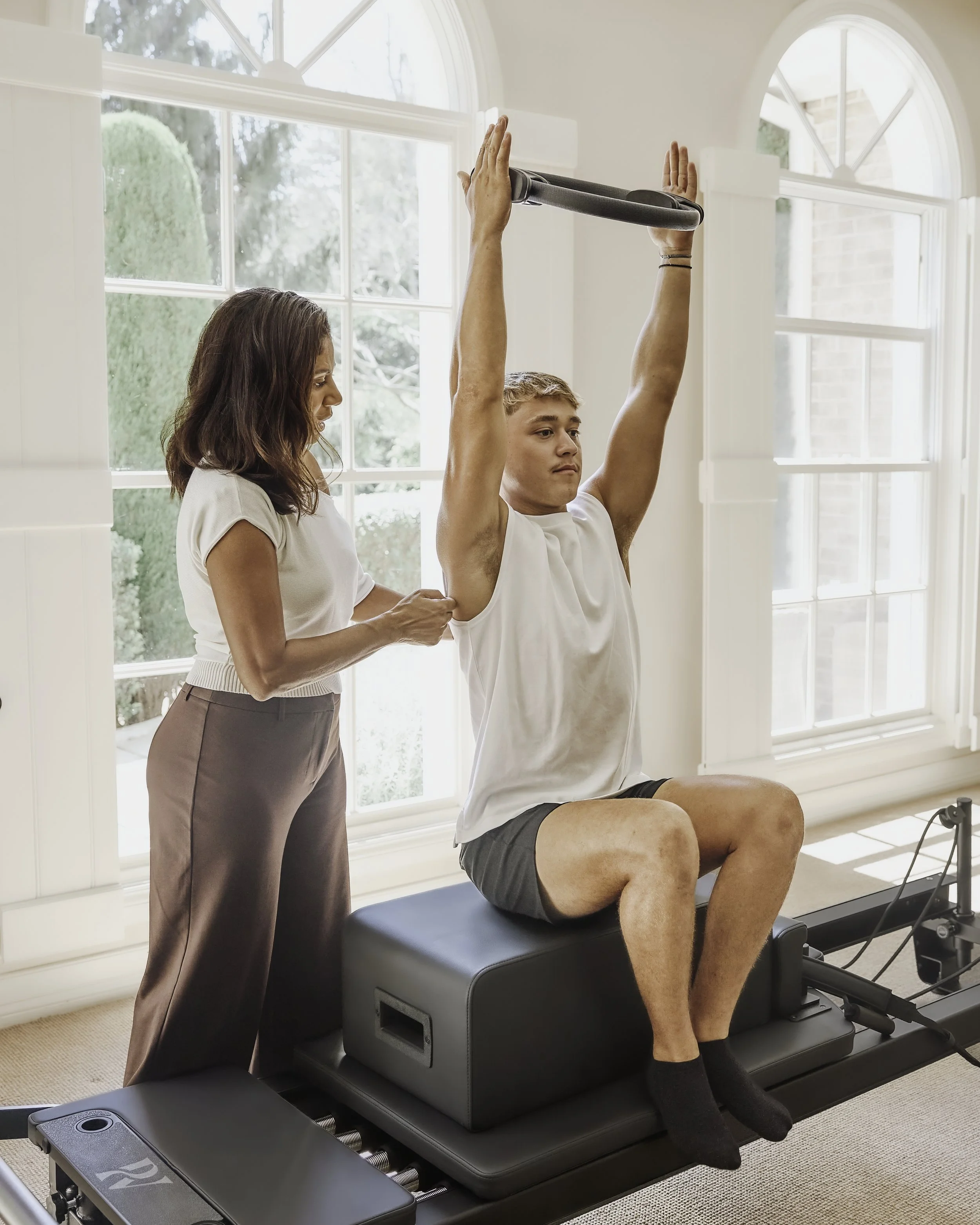
The Industry Needs More Thinking Professionals
Ultimately the long term success of the Reformer sector will not simply depend on how many studios open or how quickly the market grows. It will depend on whether the industry continues producing instructors capable of critical thinking, adaptation, professionalism and genuinely client centred teaching. Customers increasingly recognise quality when they experience it.
And as the market matures, the studios and instructors most likely to thrive long term may well be those who move beyond choreography and aesthetics alone, towards deeper education, stronger professional standards and a more thoughtful understanding of the increasingly varied populations now entering the Reformer environment.
At Mbodies Training Academy we have long believed that professional education should not simply focus on helping instructors gain an initial qualification, but on supporting long term professional development throughout their careers.
Our approach has therefore increasingly focused on high quality CPD designed to help instructors deepen their understanding of movement, client adaptation, specialist populations and thoughtful teaching practice within real world studio environments.
Importantly, we also recognise that modern instructors are balancing increasingly busy and complex lives, often combining teaching with family commitments, clinical practice or other employment. This is why our educational model has evolved around flexible hybrid learning approaches which combine supported online study, reflective learning, tutor guidance and face to face practical development where appropriate.
The objective is not simply to make education more accessible, but to make high quality professional development realistically achievable for instructors who want to continue growing well beyond their initial certification.
The Industry Needs More Thinking Professionals. Ultimately, the long term success of the reformer sector will not depend simply on how many studios open. It will depend on whether the industry continues developing instructors capable of:
critical thinking
adaptation
professionalism
empathy
communication
and long term client care
Customers increasingly recognise quality when they experience it. And as the market matures, the studios and instructors who thrive long term are likely to be those who move beyond basic choreography, social media aesthetics, and rapid qualification pathways. They will be instructors who recognise their first qualification as the bottom step in a long flight of stairs and reaching the top will require deeper education, stronger professional standards, thoughtful programming and genuinely client centred teaching.
The opportunity within the Reformer sector remains enormous but long term sustainability will depend not simply on producing more instructors. It will depend on continuing to produce better educated ones.
Author: Chris Onslow - Pilates Consultant
Chris Onslow, has run Pilates focussed businesses since 1998. He and his team specialise in supporting Pilates entrepreneurs and business owners. With a rich history of owning and running successful Pilates studios in the UK, and supporting others in Europe and the Middle East, Chris has broad expertise in maximising profitability and optimising operational efficiency. His agency provides top-tier advice on selecting new, pre-owned, and hireable Pilates equipment from renowned brands such as Align-Pilates, Balanced Body or Stott-Pilates/Merrithew. As the founder of Mbodies Training Academy, Chris continues to revolutionise Pilates education, offering premier online and hybrid CPD and qualification courses for Pilates apparatus instruction and special population CPD.